
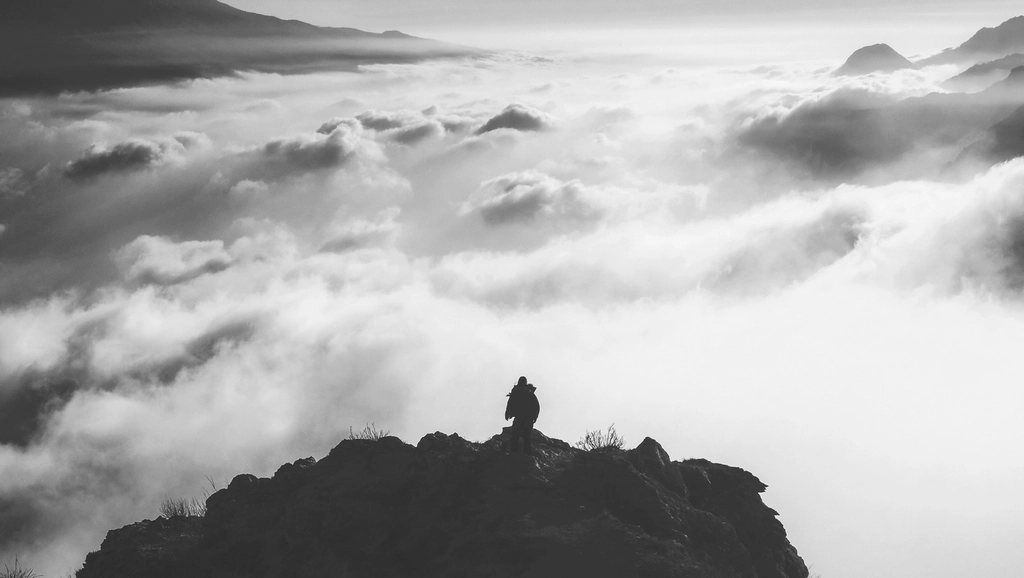
Every beginner meets fear, and most are embarrassed by it. The first capsize, the first steep descent on snowshoes, the first time the wall above looks impossibly far from the last clip, the first cold shock of open water: these moments are universal, and they are also the moments where many people quietly decide the sport is not for them. We think that is the wrong conclusion. Fear is not a sign that you are unsuited to the outdoors. It is information, and once you know how to read it, it becomes the most useful teacher you have.
Two kinds of fear, and only one of them is a problem
The first kind is a response to a real hazard. The river is faster than you expected, the snow slope is steeper than the map suggested, the water is colder than 12 degrees and your breathing is not settling. This fear is doing its job. The correct response is to act on it: turn back, portage, get out of the water, lower off.
The second kind is a response to novelty. Nothing about the situation is objectively dangerous, but it is unfamiliar, and your body reacts as if it were. The kayak wobbles on flat water and your heart rate jumps. You stand on a paddleboard for the first time and your legs shake. You are three metres up a top-rope on an indoor wall, perfectly protected, and your hands sweat. This fear is also doing its job, but its job is to make you cautious while you learn, and it will fade with exposure.
The whole skill of managing fear as a beginner is learning to tell the two apart. The test is simple: ask what would actually happen if the worst occurred right now. If the answer is “I would get wet and climb back on,” it is the second kind. If the answer involves injury, act on it.
Why the learning curve feels like it goes backwards
Progress in outdoor sports is not a straight line. It follows a pattern that surprises beginners: rapid gains in the first two or three outings, then a plateau or even a dip, then another jump. The dip has a cause. In the first outings you are operating on instinct and enthusiasm, and the environment is forgiving because you stay on easy ground. Around the fourth to eighth outing, you start noticing what you are doing wrong, you move to slightly harder terrain, and awareness arrives before ability. You feel worse because you now see more.
In cross-country skiing this is the week where the glide you thought you had disappears. In climbing it is the moment you realise you have been pulling with your arms instead of standing on your feet. In kayaking it is the first day of wind. None of it means you are regressing. It means the beginner’s blindness has lifted, and the real learning can start.
Confidence is built by exposure, not by encouragement
Well-meaning friends say “you can do it,” and it rarely helps. What builds confidence is a series of small experiences in which the feared thing happens and turns out to be manageable. The method is graded exposure, and it is used deliberately by good instructors in every sport we cover.
In kayaking, the course begins with a controlled capsize in waist-deep water, then in deep water beside the dock, then in open water with a rescue. By the third capsize, the fear has become a procedure. In climbing, beginners practise falling on a top-rope from a small distance above the last clip, then from a metre, then from two. In open-water swimming, a first entry lasts two minutes, the next five, and within a month a comfortable twenty. In snowshoeing and skiing, the equivalent is choosing a descent slightly steeper each week and stopping to look back at it from the bottom.
The key principle is that the step should feel uncomfortable, not overwhelming. If a step produces panic, it is too big; halve it. If it produces no reaction at all, it is too small. The right size is the one where you are anxious at the top and mildly pleased at the bottom.
Practical tools for the moment itself
A few techniques work in the moment across all sports. Breathing is the first: a slow exhale, longer than the inhale, for three or four cycles, lowers the heart rate and steadies the hands. It works on a paddleboard and on a ledge equally well. Narrowing attention is the second: instead of looking at the whole descent or the whole route, choose the next three metres and deal with them only. Naming the fear out loud is the third, and it sounds absurd until you try it; saying “I am scared of the wobble” to a partner takes about half the charge out of it.
- Before the outing: visualise the difficult moment once, calmly, including what you will do if it goes wrong.
- At the moment of hesitation: breathe out slowly, pick the next small target, and commit to that target only.
- After the outing: write down what frightened you and what actually happened. Reading that list a month later is the best confidence tool we know.
Overconfidence is the other side of the curve
Somewhere between the third month and the second season, a different problem appears. The beginner is no longer afraid, has a few successes behind them, and starts choosing outings that exceed their skill. Accident statistics in most outdoor sports show a cluster among practitioners with one to three years of experience, precisely because judgement lags behind confidence. A kayaker who has managed a lake in light wind heads onto a river in spring flood. A snowshoer who has followed groups all winter heads out alone above the treeline.
The protection is a habit formed early: before each outing, state the objective, the turnaround time and the conditions that will make you stop, and share them with someone. Then respect them, especially on days when you feel strong. Confidence is not the absence of fear; it is the ability to hear fear and decide calmly. The beginner who learns that in the first season carries it for life.
Give the curve time
The last thing to know is how long it takes. In our experience, a beginner who goes out roughly once a week reaches a settled level of comfort in a new sport after about a season, which is twelve to sixteen outings. Some sports are faster and some are slower, but the shape of the curve is the same: excitement, dip, patient progress, quiet competence. If you are in the dip now, you are exactly where you should be. Go out again next week, choose a step of the right size, and keep the notebook.