
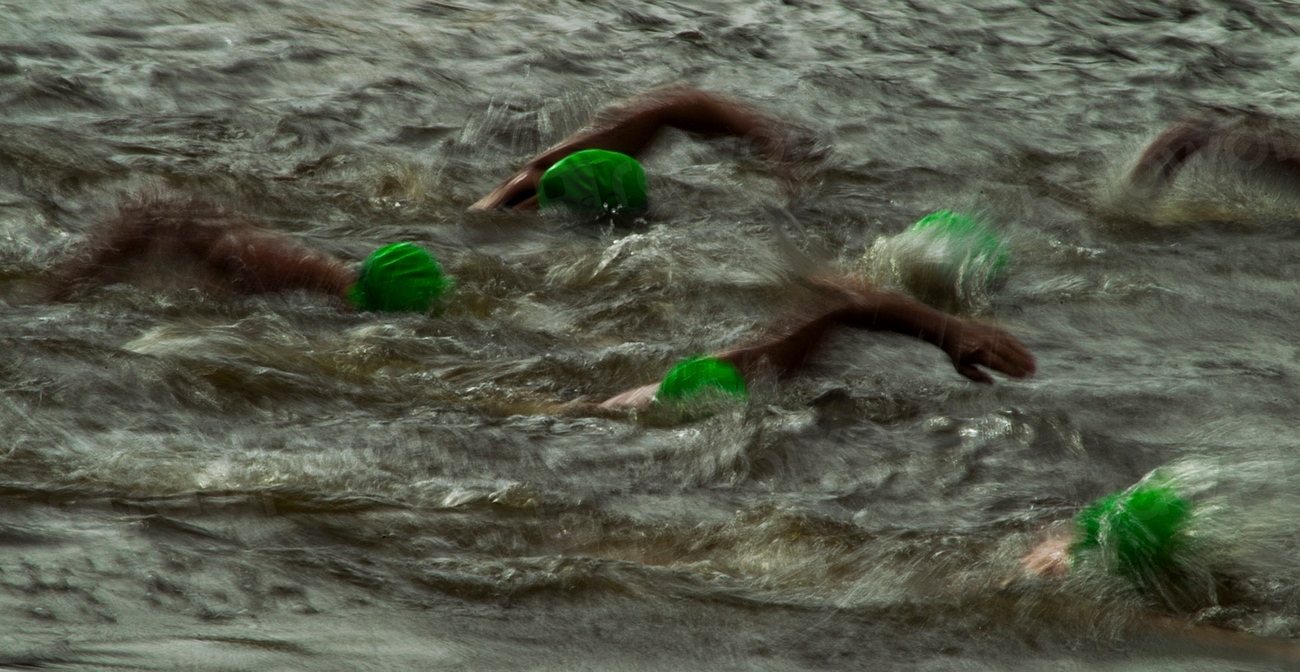
The first time we swim in open water, everything the pool taught us seems to vanish. There is no black line on the bottom, no wall every 25 metres, and the water is cold enough to snatch the breath out of our chest. Then, a few weeks later, the same swim becomes the best part of the day. Open-water swimming is a small skill set layered onto pool swimming, and most of it concerns the cold, the sighting, and the confidence to leave the shore. This guide takes a comfortable pool swimmer through the first season, up to a relaxed 500 metres in a lake or a sheltered bay.
Where to start
A first open-water venue is a lake or reservoir with lifeguarded sessions, or a sheltered sea bay with no current, no boat traffic and a gently shelving beach. Many lakes run organised swim sessions with a marked course of 250 to 750 metres, safety cover in kayaks, and a small entry fee. They are the ideal classroom because someone is watching. Rivers, harbour mouths, and any beach with surf or a known current are for later, or never. Water quality matters too: we avoid swimming after heavy rain in places with storm overflows, and we check local bathing water reports where they exist.
Before the first swim we need a bright swim cap, goggles that fit, and a tow float: an inflatable buoy on a short leash around the waist. The float makes us visible to boats and safety crews, gives something to hold when we need a rest, and does not slow us down. It is not a life-saving device, but it is the single most useful piece of open-water kit and it costs less than a pair of goggles.
Cold water and how the body responds
Most European and North American lakes sit between 10 and 20 degrees Celsius in the swimming season, and the sea is often cooler. Entering water below about 15 degrees triggers cold water shock: an involuntary gasp, rapid breathing and a spike in heart rate that peaks in the first thirty seconds and fades within two or three minutes. It is the main reason people get into trouble in open water, and it has nothing to do with fitness. The response is simple and non-negotiable: we walk in slowly, splash the neck and face, keep the head up, and float or tread water until breathing settles before we swim a single stroke.
A wetsuit designed for swimming, three to five millimetres thick with flexible shoulders, is what most beginners wear below 18 degrees. It adds warmth and a great deal of buoyancy, so much that many swimmers find their legs float higher than in the pool. Neoprene gloves, socks and a second cap extend the season in cooler water. Swimming without a wetsuit, often called skins, is a fine goal for later in the summer once we know how our body reacts.
The time limit is set by the water, not by ambition. In water of 12 to 15 degrees, a beginner in a wetsuit might swim for ten to fifteen minutes; in warmer water, longer. Cold arrives quietly. When our hands start to claw and our stroke goes ragged, we are already past the point where we should have turned back. Afterdrop, the drop in core temperature that continues for twenty minutes after we get out, catches almost everyone by surprise: we dry off quickly, dress in layers from the top down, put on a hat, and have a warm drink before we do anything else.
Sighting and swimming straight
Without a line on the bottom, most swimmers veer, sometimes by 20 degrees or more, and a 500 metre course becomes 600. Sighting is the fix: every six to ten strokes we lift the eyes just above the surface, in the moment before a breath, glance at the target and drop the head again without stopping. The target is a buoy, a tree, a tall building or a headland, chosen from the water before we set off. Lifting the whole head is tiring and drops the hips; a quick crocodile-eyes glance is enough.
Buoys on an organised course are turned wide, not tight. Near a turn buoy other swimmers bunch up and the water churns; swinging a couple of metres outside the buoy costs a few seconds and saves a mouthful of lake. In our first season we let faster swimmers go first and start at the back or the side of any group.
Building to 500 metres
The distance is short by pool standards, and that is the point. The first session is about acclimatising: in, breathe, float, 50 metres out and back along the shore, out again. The second session adds a loop of the shortest marked course, perhaps 250 metres, with rests on the tow float whenever needed. By the fourth or fifth session, a swimmer who can do 400 metres continuously in a pool can usually manage 500 metres in open water at an easy pace, which for most of us is twelve to fifteen minutes.
- Swim parallel to the shore, in water we could stand in, until sighting and breathing feel normal.
- Breathe on both sides so that waves or sun on one side never stop us.
- Rest by rolling onto the back or holding the float; treading water is exhausting.
- Get out while we still feel warm and strong, never when we are already shivering.
Never alone, and other rules that stay
The one rule that never changes is company. We swim at organised sessions, or with a partner in the water, or with someone on shore who knows our route and is watching. Cold water and cramp do not send a warning, and a swimmer 100 metres out is invisible without a float and a bright cap. We tell someone how long we will be, and we stick to it.
We also swim within our exit. The best route is a course along the shore, so that at any point we can turn and be on land in a minute or two. Swimming straight out from a beach doubles the distance from safety at every stroke. Weather is checked as carefully as for any boat: wind above about 20 kilometres per hour makes chop that swamps a breath, and a thunderstorm forecast means we stay dry.
What comes next
Once 500 metres feels routine, the sport opens quietly. A kilometre in a lake is a natural next step; a swim between two beaches in a calm bay at slack tide is another. Some swimmers head for organised events with 1.5 kilometre courses, others for the winter and the sharp joy of very cold water, in short dips with careful warm-up routines. All of it rests on the habits of the first season: enter slowly, sight often, stay close, get out early, and never go alone. The lake will still be there tomorrow.