
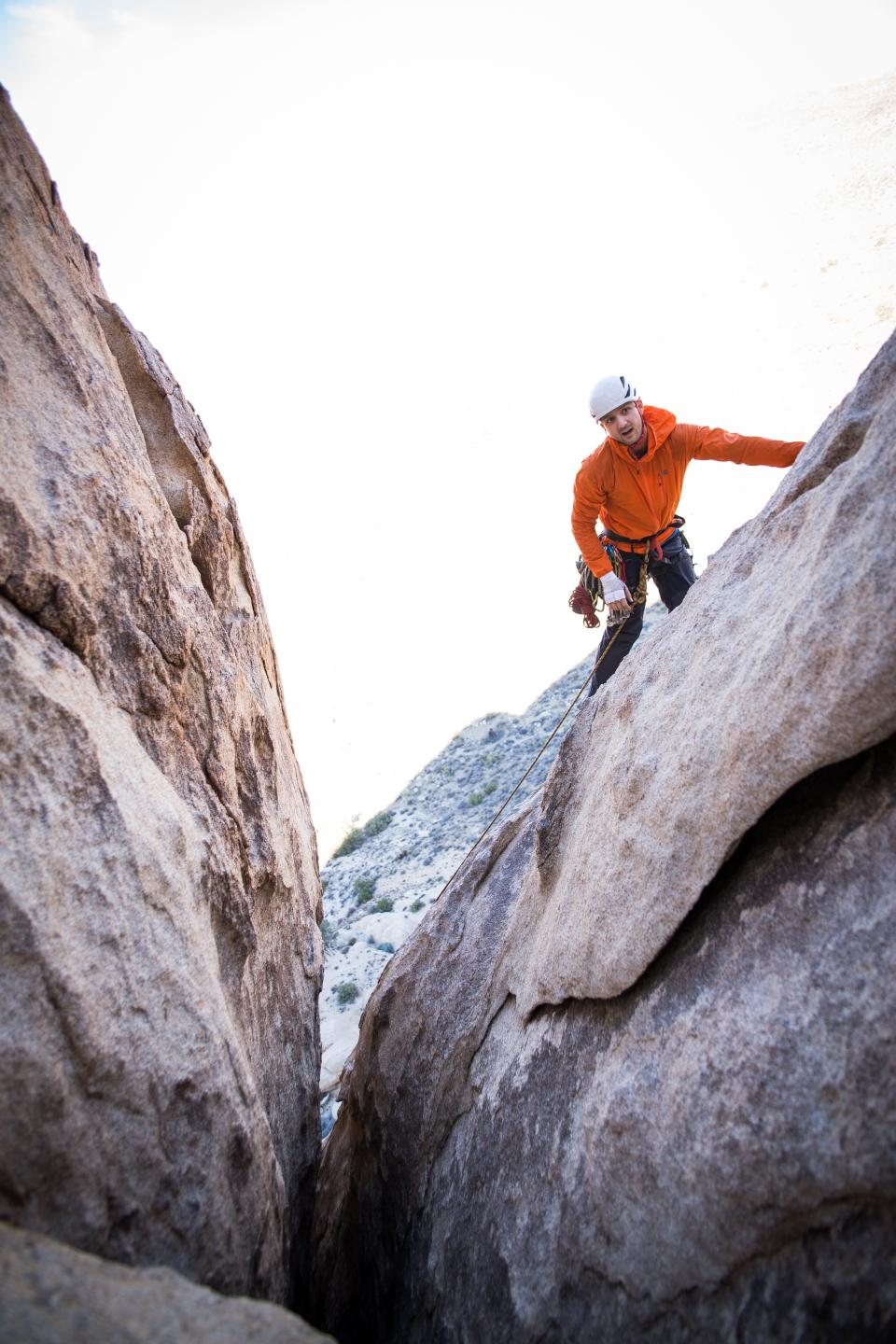
Most of us learn to climb indoors. The holds are colour coded, the bolts sit a metre or so apart, the floor is padded and someone resets the routes every few weeks. Then one weekend a friend says “let’s go to a real crag” and everything we thought we knew gets quietly rearranged. The movement is the same, but the environment, the risks and the decisions are not. This guide walks through what actually changes when we take our indoor skills outside, and how to make that first day on rock a good memory rather than a scary one.
The rock does not tell you where to go
Indoors, a route is a set of holds in one colour. Outdoors, every feature on the wall is available and none of it is marked. Beginners spend the first hour looking for “the holds” and finding only a blank sheet of stone. The trick is to lower our eyes: outdoor holds are usually smaller, closer together and far more varied than plastic. A slight ripple can be a foothold. A crack can take a hand, a foot or a fist. Reading rock is a skill in itself and it takes several sessions before our eyes adjust.
Grades also shift. A route graded the same as our indoor limit will almost always feel harder outside, because footwork on real rock is more demanding and because the mental load is higher. Most climbers drop two or three grades on their first outdoor days. That is normal and temporary; it is not a sign that the gym grades were “soft”.
Bolts are further apart and the falls are different
On a sport route indoors, the first bolt is usually within reach and the next ones follow every metre or so. Outdoors, the first bolt is often three to four metres off the ground and the spacing between bolts can be similar or wider. A fall before the second clip can reach the ground. That changes how we climb the start of a route: we climb it as if it were bouldering, with full attention, and some parties use a stick clip to pre-clip the first bolt from the ground.
Falling itself is different. Indoors the wall is smooth and the fall is clean. Outdoors there are ledges, aretes, roofs and loose blocks that we can hit on the way down. Before leading anything, we look at the line of the fall from each clip and ask where our body would end up. If the answer is a ledge, we either climb the section with extra care or choose another route.
The belayer has more to think about
An outdoor belayer is not standing on a flat mat. We may be on a slope, among boulders, or below an overhang that hides the climber from view. The belay spot matters: we want to stand close to the wall so that a fall does not drag us forward into the rock, we clear the ground of loose stones we could trip on, and we wear a helmet, because rockfall and dropped gear are real.
Communication also changes. A breeze, a river or a crag full of other parties can swallow our voice. Before leaving the ground we agree on simple, unambiguous calls and, if the top of the route will be out of sight, on what to do if nothing can be heard. A reliable rule is that the rope goes slack only when the climber has said, and the belayer has understood, that they are safe.
Getting down is part of the route
In the gym, we lower off a fixed anchor with a locking gate that someone inspects. Outdoors, the top of a sport route is usually two bolts joined by chain, rings or a single lower-off. Learning to clean an anchor correctly is a non-negotiable skill before we lead outside, and it should be learned on the ground first, with a partner watching, then repeated on a route while still on belay. The steps are simple but the consequences of a mistake are serious: we stay attached to the anchor with a sling or quickdraws at all times while we untie and re-thread, we check that the rope runs through metal that is meant to be lowered from, and we confirm the belayer has us before we unclip.
Some crags do not have lower-offs at all and require a walk-off from the top. In that case, we bring shoes we can walk in, we know the descent path before we start and we keep our rope organised so that it does not snag on the way down.
Weather, rock and conditions
A climbing wall is always open and always 20 degrees. A crag is not. Limestone becomes slippery when polished by decades of hands, and holds that are greasy in the afternoon sun can feel crisp on a cool morning. Sandstone must not be climbed when wet, because the surface layer weakens and holds can break. Granite is rough on the skin and shreds fingertips faster than plastic. Most beginners find that early mornings, shaded walls and dry days in spring and autumn give the best friction and the most enjoyable climbing.
Conditions also include the approach. A ten minute walk on a good path is one thing; a 40 minute scramble up scree with a heavy pack is another. We check the approach time in the guidebook, we carry water (a litre per person for a half day is a sensible minimum), and we allow extra time to find the crag on the first visit, because paths are not signposted like a sports centre corridor.
Etiquette and the first day plan
Crags are shared. We keep our gear tidy at the base, we do not hang on a route for an hour while others wait, we keep dogs and music at home, and we take every scrap of tape and wrapper away with us. If a route has a bird nesting restriction or a seasonal closure, we respect it. Many crags exist on private or protected land and access depends on climbers behaving well.
- Choose a single-pitch sport crag with a short, easy approach and plenty of routes two or three grades below our indoor level.
- Go with someone experienced, or book a session with a qualified instructor for the first day.
- Start on top-rope or second the routes before leading anything.
- Bring a helmet each, a 60 or 70 metre rope suited to the route lengths, 12 quickdraws, slings and locking carabiners for cleaning anchors, and shoes for the approach.
- Practise cleaning an anchor on the ground until it is automatic.
- Stop while it is still fun. Three or four good routes are a successful first day.
The shift from gym to crag is less about strength and more about attention. The rock rewards patience, reading and calm decision-making, and it gives back something the gym cannot: a view from the top, a breeze on our face and the feeling of having climbed something that will still be there in a hundred years.