
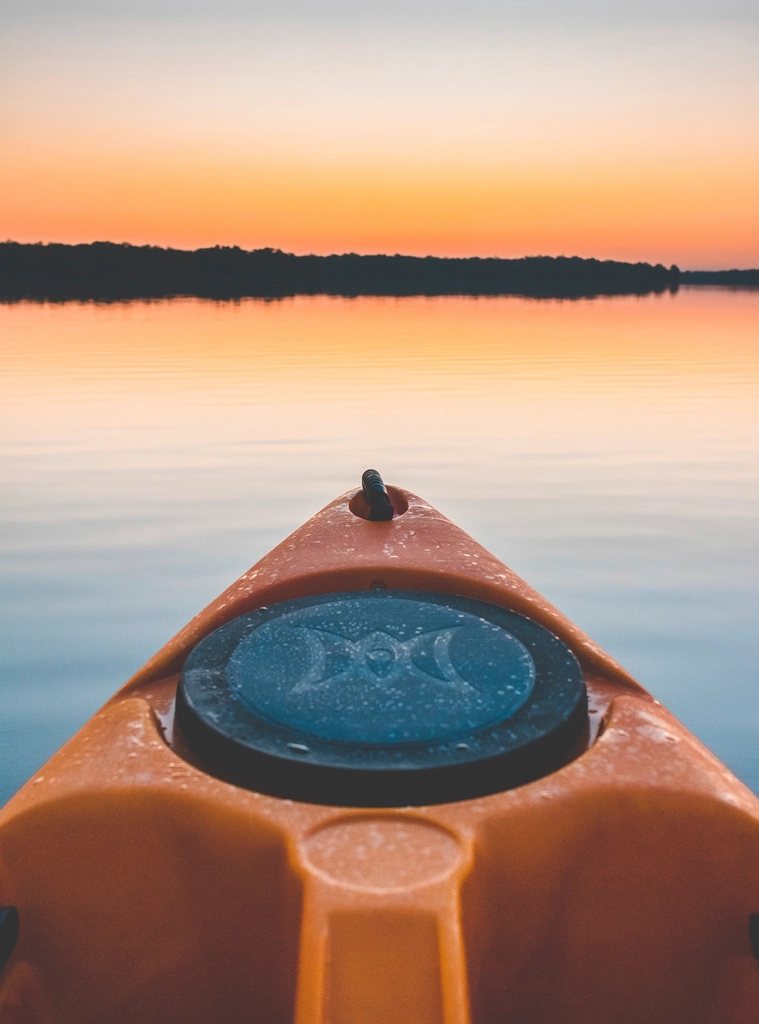
Most of us do not choose our first outdoor sport. We fall into it because a friend had a spare paddle or a cousin needed a partner for a snowshoe weekend. That works, but it also explains why so many first seasons end in a garage full of gear nobody uses. Choosing on purpose takes an afternoon of honest thinking and saves a year of false starts. Here is the method we use with newcomers, whatever the season they arrive in.
Start with the terrain you can actually reach
The best sport for you is the one you can practise every week, not the one that looks best in photographs. Take a map and draw a circle of 45 minutes of travel around your home. Inside that circle, what do you find? A lake or a slow river points to kayaking and paddleboarding. Rolling hills with winter snow cover for at least eight weeks point to snowshoeing and cross-country skiing. A crag or an indoor wall points to climbing. A network of forest trails with a local map series points to orienteering. A sheltered bay or a supervised quarry lake points to open-water swimming. Almost anywhere with a phone signal supports geocaching.
Be honest about the 45 minutes. A sport that needs a three-hour drive becomes a holiday activity, which is fine, but it is not a first sport. Beginners progress through frequency, and frequency depends on proximity.
Match the sport to how your body likes to work
Outdoor sports load the body in very different ways, and the sport that fits your natural pattern will feel easier from the first day. Ask yourself which of these describes you better.
If you like steady, rhythmic effort and can happily walk for two hours, cross-country skiing, snowshoeing and flat-water kayaking will suit you. They reward patience and consistent pacing rather than bursts of power. If you prefer short intense problems followed by rest, climbing is built exactly that way: a route of 12 to 20 metres takes a few minutes, then you rest and think. If you enjoy puzzles as much as movement, orienteering and geocaching turn a walk into a navigation game, and the physical demand scales with the course you pick. If you find calm in repetition and water, open-water swimming is the quietest of all, but it asks for a real comfort level in cold water, which is something to test before committing.
Paddleboarding sits in the middle: it is gentle on flat water, works the whole body through balance, and becomes a strong workout only if you want it to.
Count the real learning curve, not the marketing one
Every sport has a point where a beginner becomes safe enough to go out without supervision. That point arrives at different times.
Snowshoeing is the fastest. Most people are competent within one outing, because it is walking with larger feet. Paddleboarding on calm water takes two or three sessions to feel stable. Flat-water kayaking takes a short course of two or three days to learn a forward stroke, a rescue and how to read wind. Cross-country skiing in classic style takes a season to become smooth, and skate style takes longer. Orienteering can be started on a beginner course the first day, but reading contour lines fluently takes a dozen events. Climbing indoors is safe within one induction session, but leading outdoors takes a full season of mentored practice. Open-water swimming is the sport where the learning curve is mostly mental: acclimatising to water below 15 degrees takes weeks of short, repeated exposure.
None of these is a reason to avoid a sport. They are simply the price of admission, and it helps to know the price before paying it.
Check the season you are starting in
Timing matters more than people expect. Someone who decides in October to learn kayaking will spend five months reading about it. Someone who decides in October to learn snowshoeing will be on snow within eight weeks in most northern regions. A good first sport is one whose season is about to start, so that enthusiasm and opportunity arrive together.
In the northern hemisphere the practical windows look like this. Snow sports run from December to March at lower elevations and into April above 1,500 metres. Paddle sports and open-water swimming are comfortable from late May to September in temperate zones, with water temperatures that only reach 18 to 20 degrees in July and August. Climbing outdoors is best in spring and autumn, when rock is dry and temperatures sit between 10 and 20 degrees. Orienteering and geocaching run all year, with orienteering events concentrated from March to November.
Weigh the first-season cost and the people around you
Two practical filters remain. The first is money. A first season of geocaching costs almost nothing beyond a phone and good shoes. Snowshoeing and orienteering sit at the low end, with rental or a modest purchase. Paddle sports and cross-country skiing are moderate if you rent for the first season. Climbing needs a course and a membership. Open-water swimming needs a wetsuit and, ideally, a supervised venue with a fee per session. We cover full budgets elsewhere, but the ranking above is a fair guide.
The second filter is company. A sport practised alone is safer with experience and riskier without it. Kayaking, open-water swimming and outdoor climbing should never be learned solo. Snowshoeing, geocaching and paddleboarding on a small lake can be started alone with basic precautions. If nobody you know practises the sport, factor in the time it takes to find a course or a group, and choose a sport where beginner sessions are easy to find near you.
Make the decision, then test it for six weeks
Here is the exercise. Take the sports still standing after the four filters above and score each one from 1 to 5 on three questions: how easily can I reach it every week, how much do I enjoy the type of effort, and how soon can I start. Add the scores. The winner is your first sport for the next six weeks.
Six weeks is the test period, not a commitment for life. Book a beginner session in week one. Go out at least four more times. Rent rather than buy. At the end of six weeks, ask a single question: do I look forward to the next outing? If yes, the sport has chosen you back, and it is time to plan a proper first season. If no, nothing is lost. Move to the runner-up on your list and run the same test. We have seen many people find their real sport on the second try, and almost nobody regret the first six weeks.