
Somewhere on most mountain walks there is a moment when the path steepens, the poles get strapped to the pack and our hands reach for the rock. That moment is the beginning of scrambling: terrain too steep and rocky to walk but not steep enough to need a rope on every metre. It is the bridge between hiking and climbing, and for many of us it becomes the most enjoyable kind of mountain day. It is also the place where accident statistics climb sharply, because the ground looks like hiking while the consequences of a slip are those of climbing. This guide explains how scrambling is graded, what skills it needs, and how to choose a first route that is exciting without being reckless.
What scrambling is and how it is graded
A scramble is a route where we use our hands for balance and progress, usually on ridges, buttresses or steep gullies. Britain uses a three-grade system that many guidebooks elsewhere have adopted. Grade 1 is steep walking with occasional easy rock steps and limited exposure, where a confident hiker will not need a rope. Grade 2 involves longer, steeper rock sections with real exposure, where many parties will want a rope for one or two steps. Grade 3 is close to easy rock climbing, with sustained, exposed sections where a rope and some climbing knowledge are normal.
North America uses the class system instead. Class 1 is walking on a trail, class 2 is off-trail hiking that may need hands occasionally, class 3 is scrambling with hands used for climbing and a fall that could cause serious injury, and class 4 is exposed climbing where a fall would likely be fatal and most parties use a rope. Class 3 corresponds roughly to a British grade 1 or 2.
Whatever the system, a grade describes the hardest move in good, dry conditions. Rain, wind, snow or ice can turn a grade 1 into something no grade covers.
Some classic first routes and what they teach
A few well known ridges show the range. In Wales, the north ridge of Tryfan rises to a summit of about 918 metres over a broad, blocky crest where almost every step can be chosen, and it is a much-loved grade 1 for first-timers. Crib Goch, on the horseshoe around the 1,085 metre summit of Snowdon, is also grade 1 but far narrower, with a knife-edge section where the drop on both sides is several hundred metres; it teaches exposure more than technique. In the English Lake District, Striding Edge leads to the 950 metre top of Helvellyn along a narrow arete with a simple path along the crest and a short rock step near the end. In the Colorado Rockies, the standard route up Longs Peak, 4,346 metres, is graded class 3 and combines easy scrambling with altitude, weather and a long day of 12 to 15 hours for most parties.
None of these routes are technically difficult on dry rock. What they share is that a slip in the wrong place would be serious, and that is the essence of scrambling: the moves are easy, the margin for error is not.
Movement skills
Good scrambling looks calm and unhurried. We keep three points of contact whenever the ground is exposed, moving one hand or one foot at a time. We test every hold before committing to it, pulling gently and listening for the hollow sound of a loose block. We climb with our feet and use our hands for balance rather than hauling, because legs are stronger than arms and tire far more slowly. We keep our weight over our feet with the hips away from the rock, which gives the soles the best contact, and we look ahead to plan two or three moves rather than one.
Descending is harder than ascending and most scrambling accidents happen on the way down. On easy ground we face outwards and step down carefully. As soon as the ground steepens, we turn to face the rock and downclimb as if on a ladder, feeling for footholds with the toes. A good habit is to look at every step on the way up and ask whether we would be happy reversing it; if the answer is no, we should not be going up it without a plan for getting down.
Judgement and the decision to turn back
Scrambling asks for judgement more than strength. Before every route we check the weather forecast for the summit, not the valley, and we treat wet rock, strong wind and any chance of snow or ice as reasons to choose a walking route instead. Wind on a narrow ridge is particularly underestimated: gusts of 50 kilometres an hour can push an adult off balance on a crest a metre wide. We also check the descent. Many scrambling routes are ridges with a walking descent on one side; knowing it before we start means we never have to reverse the hard sections in fading light.
We give ourselves permission to turn back before we leave the car park. A route that feels wrong at the first rock step will not feel better higher up, and the ground behind us is always easier to reverse than the ground ahead is to climb.
What to wear and carry
Scrambling gear is hiking gear with a few additions.
- Boots or approach shoes with a stiff sole and sticky rubber, laced firmly so the foot does not move inside.
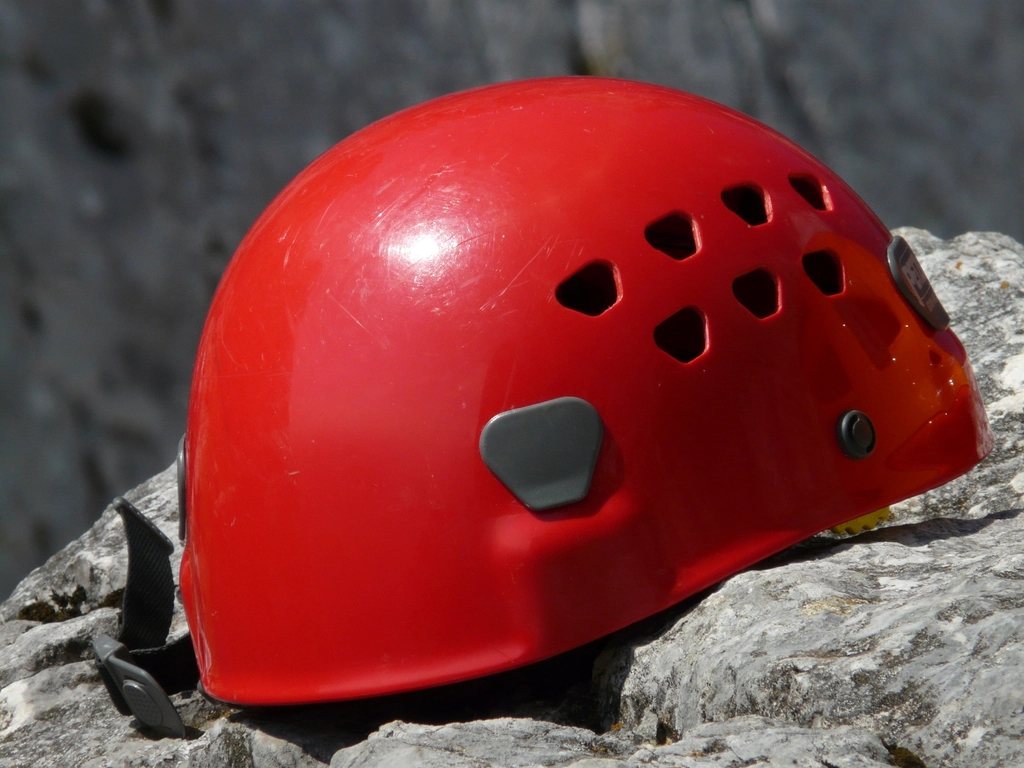
- A climbing helmet on any route with loose rock above, other parties or a narrow gully, which in practice means most grade 2 and 3 scrambles.
- A pack of 20 to 30 litres that sits close to the back and has nothing dangling from it.
- Poles that collapse and stow inside or flat against the pack before the rock starts.
- Gloves with grip for cold rock, a warm layer and a waterproof, because ridges are exposed to wind.
- Map, compass, headtorch, first aid kit and, on harder routes, a short rope with a few slings for confidence on the hardest step.
A sensible progression
We start with a grade 1 route in good weather, in a group of two or three, with someone who has done it before if at all possible. We choose a ridge with an easy escape and a clear walking descent, and we give the day plenty of time so that no one feels rushed at the crux. After several grade 1 days in different conditions we will know whether exposure excites or frightens us, and that answer, not fitness, decides whether grade 2 is next. A short course with a qualified mountain instructor is the fastest way to learn rope skills for the harder grades, and it also teaches the most important lesson of all: when to leave the rope in the bag and simply walk.
Scrambling gives the mountains a new dimension. The same hill that we walked up last year becomes a line to be read, a ridge to be followed and a summit that we reached with our hands as well as our feet.
Read next: Fun Things to Do in Tucson for Outdoor Beginners: Desert Trails and Canyons