
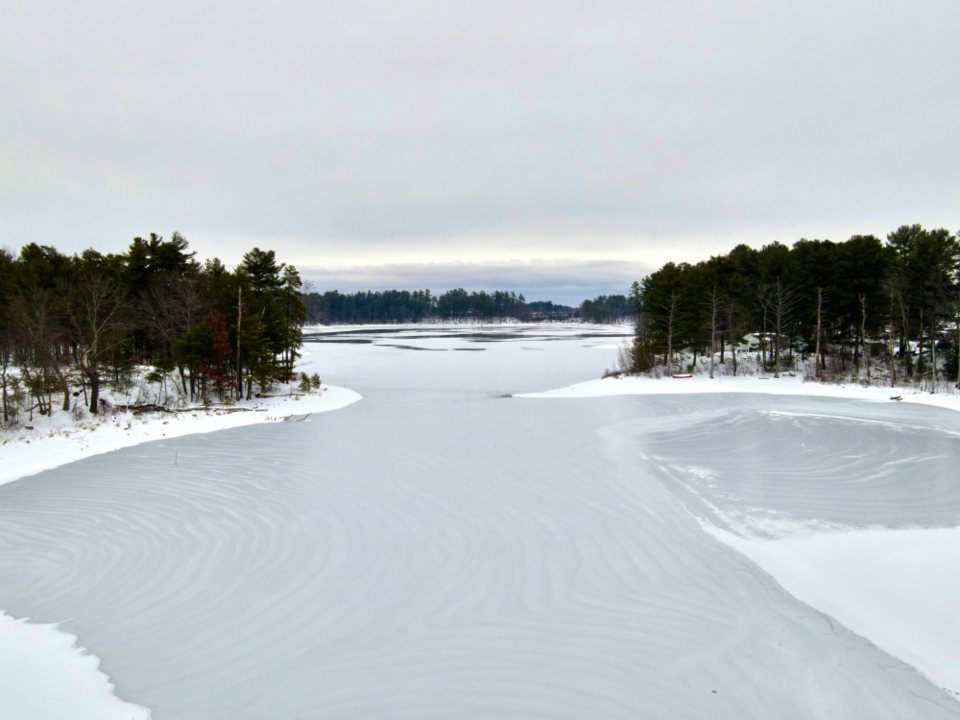
There is nothing in winter quite like the first long stride across a frozen lake, with the ice ringing under the blades and the shoreline sliding past. Wild ice skating, also called nordic skating or tour skating, has grown from a regional tradition in a few northern countries into a sport that beginners discover every year. It is also the winter activity where a moment of poor judgement has the least margin, because the failure mode is falling through into water near zero degrees. This article gives the general rules for judging ice, the equipment that makes a fall through survivable, and the habits that keep you from needing it.
How thick is thick enough
The figures that safety agencies in cold countries publish are consistent. Below 5 centimetres of clear, solid ice, stay off. From about 10 centimetres, clear ice supports a person on foot or on skates. Around 20 centimetres it supports a group standing together or a snowmobile. Cars and light trucks need 30 centimetres or more, and most of us should never drive on ice at all. Recreational skating organisations in regions with long traditions often work to a more conservative rule for beginners, closer to 10 to 12 centimetres of good ice before a group sets out.
The word that matters in every one of those figures is clear. Black or blue ice, which looks dark because you can see the water through it, is the strongest. White ice, formed from snow that soaked and refroze, is roughly half as strong for the same thickness. Grey ice contains water and is weaker again. Slush is not ice. When you read a thickness guideline, it assumes clear ice, and any other type needs to be considerably thicker to be equivalent.
Why thickness is never uniform
A lake does not freeze evenly, and a single measurement tells you about a single spot. Ice is thinner where water moves: over inlets and outlets, along a river channel that runs through a lake, around springs, and near bridges and culverts on canals. It is thinner around anything that sticks through it, such as reeds, docks, rocks and moored boats, because those objects absorb sunlight and conduct heat. It is thinner where snow has insulated the surface and slowed the freeze, which is why a smooth snow-free expanse can be safer than the drifted edge. Large lakes freeze later than small ones, deep water later than shallow, and a lake with a current at one end may never be safe at that end all winter.
Canals present their own pattern. Locks, weirs and outfalls create flow that keeps ice thin nearby, and boats that continue to move through the season leave channels that refreeze as weak, dark seams. Ice near walls and moorings is undercut by warmer water and by thaw runoff from the towpath.
The season adds another dimension. Early ice in December is thin and growing; late ice in March may be thick but rotten, with vertical channels that let water through and a surface that collapses without warning even at 30 centimetres. A sunny week in spring can take a skating season from excellent to closed in three days.
Checking the ice yourself
Skaters in countries with an established tradition rarely go out without an ice pick or a long-handled test pole. Every few strides on unfamiliar ice, and continuously near any of the features above, you strike the surface hard ahead of you. If a single firm blow goes through, turn around. If two blows are needed, the ice is marginal. Solid ice takes several blows and sounds high and clear rather than dull. Drilling a hole with a hand auger at the shoreline and measuring with a tape confirms the general thickness before committing, and repeating the measurement in a few places will show you how much it varies.
Many lakes and canals in skating regions are checked and signed by local authorities or volunteer groups during the season, with status posted online or on boards at the access points. Where that system exists, use it and respect a closed sign without exception. Where it does not, the checking is entirely on you, and the safe assumption is that unknown ice is unsafe until proven otherwise.
What to carry and why
The equipment for wild ice is chosen entirely around one scenario: getting yourself out of the water and staying alive afterwards.
- Ice claws worn around the neck: two short handles with steel spikes that let you grip the ice edge and haul yourself out, since wet gloves on smooth ice give no purchase at all.
- A throw line of 15 to 20 metres in a bag at the waist, so a companion can pull you out without approaching the hole.
- A test pole or ice pick, as described above.
- A backpack with a dry bag containing a full change of clothes, closed with a waist strap and chest strap so that it also acts as flotation.
- A whistle, and a phone in a waterproof pouch inside the pack, not in a pocket that will end up submerged.
Skate in a group of at least three, spread out so that only one person is on any patch of ice at a time, and never with a dog on a lead, which can pull a skater toward thin ice. Keep the pack on when you fall, because it floats. Stay away from the edges of any hole in the ice and from any patch that looks darker or wetter than its surroundings.
If you go through
The first minute is the cold shock: gasping, rapid breathing, panic. It passes. Keep your head up, turn toward the direction you came from, because that ice held you a moment ago, and get your arms out flat on the surface. Set the ice claws, kick hard to bring your body horizontal, and pull yourself out onto the ice. Do not stand up. Roll or crawl away from the hole until you are well onto ice you trust. Then get to shore, strip the wet layers, put on the dry ones from the pack, and get moving or into shelter. In water near zero degrees you have roughly ten minutes of useful movement before your hands and arms stop working, which is why the claws are worn where you can reach them and not carried in the pack.
Starting the sport sensibly
Begin on maintained rinks and on lakes or canals that are checked and signed. Learn to skate on long blades on safe ice before adding the judgement of wild ice. Join outings with people who have done it for years and ask them how they read a surface. Skating across a wild lake is one of the great winter experiences, and the discipline that makes it safe is not complicated: know the thickness, know the ice type, know where the weak spots form, carry the gear, and go home when the ice says no.