
To canoe on a lake for the first time, pick a small, sheltered body of water, dress for getting wet, wear a well-fitted buoyancy aid and keep the session short. A lake gives you no current to fight, so you can learn balance, steering and communication at your own pace. Most of the work happens before you leave the dock: choosing where to paddle, checking the wind and agreeing on roles with your partner.
Why is a lake the gentlest place to start canoeing?
Flatwater removes the variables that make beginners nervous. There is no current pushing you toward hazards, no rapids to read and no tide to time. The only forces you need to understand are your own balance, your partner’s movements and the wind. That is why a lake teaches fundamentals faster than almost any other setting.
Calm water also forgives mistakes. If you wobble, drift off line or tangle your paddles, the lake simply lets you try again. You build the habit of making small, controlled movements, which matters far more in a canoe than strength does.
Choose a lake that is modest in size. A small lake means the far shore is never far away, and it usually means less room for wind to build up waves. Some lakes are well known as starting points for paddlers: Canoe Lake in Ontario’s Algonquin Provincial Park serves as a gateway for canoeists heading into the park, with an outfitter on site that hires out gear. A comparable setup, where you can hire gear nearby, is worth looking for in your own area. If you are in British Columbia, a calm lake for a first paddle can be a good place to build confidence before you try anything bigger.
How do you choose a sheltered spot and read the wind?
Your first decision is where on the lake to paddle. A sheltered bay, with trees or hills on the windward side, keeps the surface flat and lets you concentrate on technique rather than on staying upright in chop.
Reading the surface
Look at the water before you launch. Flat, glassy patches mean little wind. Dark, ruffled patches moving across the surface are gusts. Small whitecaps are a sign to stay ashore for a first session. Watch how the shoreline treetops move as well: if the branches are swaying steadily, the wind is stronger than the sheltered shore suggests.
The headwind on the return trip
The most common beginner mistake is paddling out with the wind at your back, enjoying the easy glide, and only realizing on the way home that you must paddle straight into it. A tailwind feels effortless, which hides how much work the return leg will be. Plan the opposite way: start by paddling into the wind while you are fresh, so the wind helps you home when you are tired.
Stay close to the shore, keep the launch point in view, and turn around earlier than you think you need to. If the wind picks up while you are out, head for the nearest sheltered stretch of shoreline rather than crossing open water.
What do you wear and bring on your first paddle?
Dress for the possibility of getting wet, even on a warm, calm day. Water stays cold long after the air has warmed, and a capsize or a splash from a paddle can chill you quickly.
- Layers of wool or synthetic fabric. These keep insulating when damp. Cotton does the opposite: it holds water and pulls heat from your body.
- A buoyancy aid that fits. It should sit snugly without riding up around your ears when you lift the shoulder straps. Wear it the whole time, not stowed under a seat.
- Footwear that can get wet. Closed shoes or sandals with a secure strap work well. Avoid bare feet near a rocky or muddy put-in.
- A spare layer in a dry bag. A dry top for the end of the session is a simple comfort that makes a cold day far more pleasant.
- Water and sun protection. Reflection off the surface increases glare, so a hat and sunglasses help.
Leave phones and keys in a waterproof pouch or at home. Anything that cannot get wet should be sealed before you step into the boat.
How do you load a canoe, paddle with a partner and use the three core strokes?
A canoe is stable when your weight is low and centred, and unstable the moment you stand or shift suddenly. Most tips happen at the dock, so slow down there.
Getting in without tipping
Hold the dock or have someone steady the boat. Place your foot in the centre line of the canoe, keep your weight low, and hold both gunwales as you sit. Keep three points of contact, for instance two hands and one foot, until you are seated. Your partner then repeats the process from the other end. Never step on the edge of the boat, and never stand up once you are afloat.
Who steers and how you talk
In a two-person canoe, the person in the stern, at the back, does most of the steering, while the person in the bow, at the front, provides forward power and watches for obstacles. Agree on this before you launch. Use short, clear calls such as “turning left” or “stop” so there is no confusion. Make course changes gradually and announce them, and keep your movements small so the boat does not rock.
The three strokes to learn first
- Forward stroke. Reach ahead, plant the blade, and pull the boat past it rather than pulling the paddle toward you.
- Draw stroke. Reach out to the side, place the blade in the water, and pull the canoe sideways toward it. This is how you ease alongside a dock.
- J-stroke. Used by the stern paddler, it finishes a forward stroke with a small outward flick of the blade, forming a J shape, to keep the canoe running straight without switching sides.
Practise each stroke slowly in a calm bay until it feels natural. These three cover most of what you will need on flat water.
How long should a first session last, and how do you find a lesson?
Keep a first outing short. Sixty to ninety minutes on the water is a realistic target for most beginners. Paddling uses shoulders, back and core in ways that surprise people, and technique falls apart quickly when you are tired. Stopping while you still feel good means you will want to come back.
Why a lesson or club session beats going alone
A lesson or a guided club hire session gives you three things that are hard to replicate alone: equipment that fits, a calm spot chosen by someone who knows the water, and feedback on your strokes before bad habits set in. It also means someone else is watching the weather and the other boats.
To find one, look for local paddling clubs, outdoor centres and rental operators that offer introductory sessions. Many lakes with popular canoe access points have an outfitter that rents gear and can point you toward instruction or guiding. Ask what is included, whether buoyancy aids are provided, and whether sessions are held in a sheltered area.
Let someone know where you are going and when you expect to be back, even for a short paddle. Once you have a few sessions behind you, you will be better placed to judge the wind, handle the boat and decide where to go next.
Frequently asked questions
Do you need to know how to swim to canoe on a lake?
Confidence in the water helps, but a properly fitted buoyancy aid is the key piece of safety equipment, and you should wear it for the whole session. If you are nervous about swimming, tell your instructor or rental operator so they can pick a calm, shallow area.
Which seat should a beginner take in a two-person canoe?
The stern seat, at the back, steers, while the bow seat at the front provides power and watches ahead. If you are the more confident paddler, take the stern and let your partner learn the forward stroke first, then swap roles later.
What happens if the canoe tips over?
Stay calm, keep hold of the boat, and stay with it because a canoe will float and is easier to see than a swimmer. Kick or paddle it gently toward the nearest shore. This is another reason to stay close to land on your first outings.
Can you canoe on a lake alone as a beginner?
It is better not to. A first session with a lesson, a club or an experienced partner gives you help with the boat, the wind and your strokes. Once you are comfortable, you can build up to paddling more independently.
Related reading
- Canoe Camping: Planning Your First Overnight on a Lake
- Sea Kayaking for Beginners: The Boat, the Tide and Your First Sheltered Paddle
Sources
- Canoe Lake (Nipissing District) (en.wikipedia.org, accessed 2026-11-04)
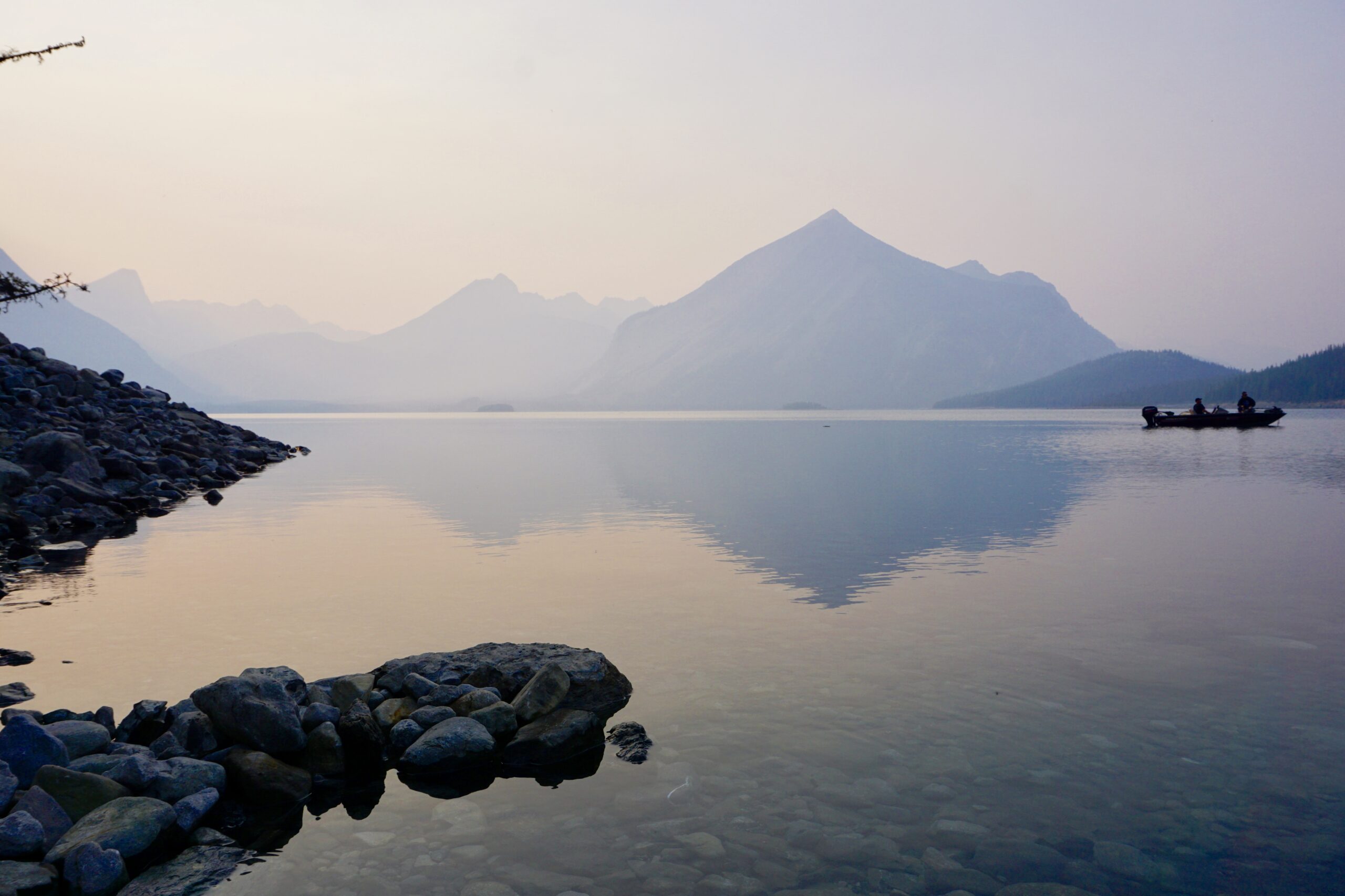
Photo: Canoeing over Kananaskis Lake, by Dylannother, CC BY-SA 4.0 (Wikimedia, via Openverse)